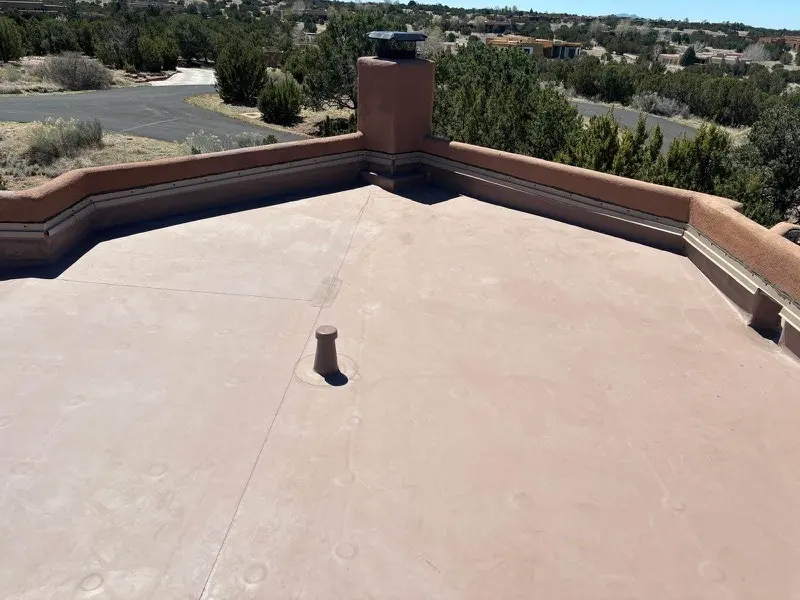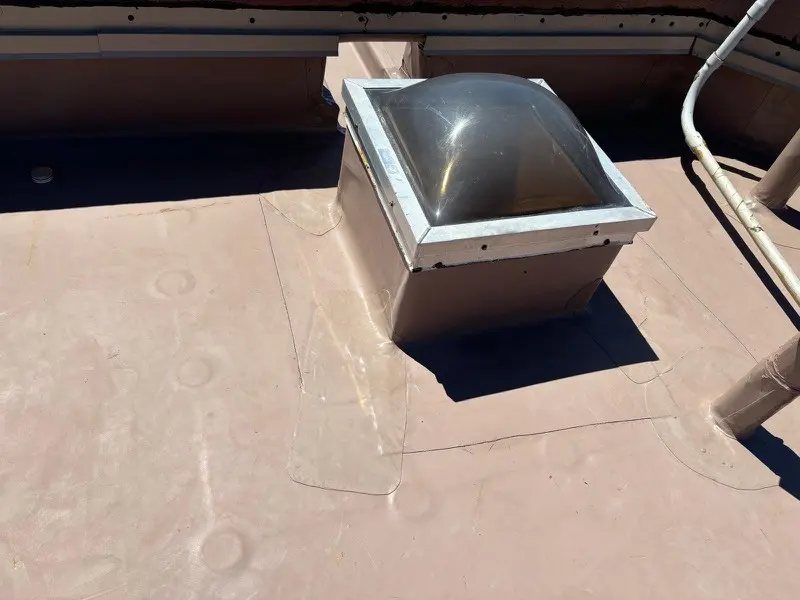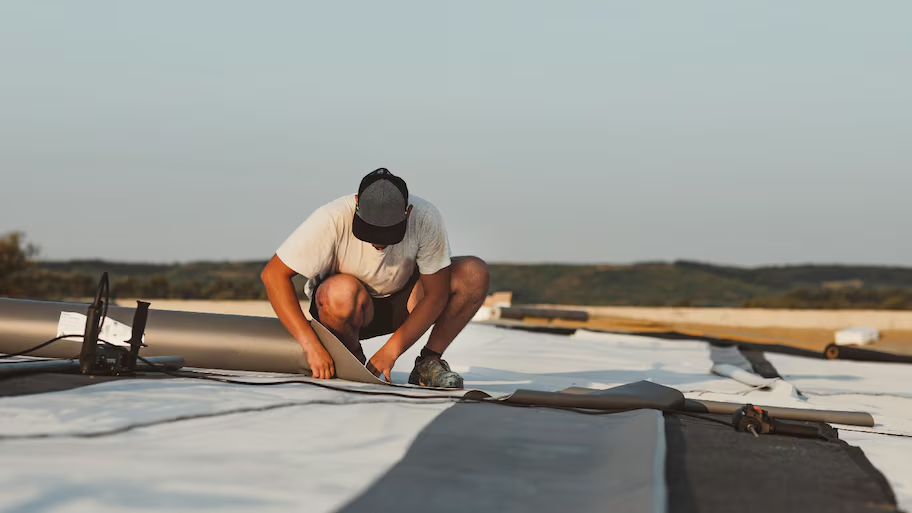
The most common TPO problem is seam failure — where heat-welded joints separate and allow water infiltration. This single issue accounts for roughly 80% of all TPO roof leaks we repair in Santa Fe. The good news: most TPO problems are fixable without a full replacement if caught early.
Below are the 5 problems we see most often on TPO roofs in New Mexico, why they happen, and what to do about each one.
For an active leak, standing water, or damaged membrane, our Santa Fe flat roof repair service can diagnose the source before you decide between repair, coating, or replacement.
1. Seam Failures (The #1 TPO Problem)
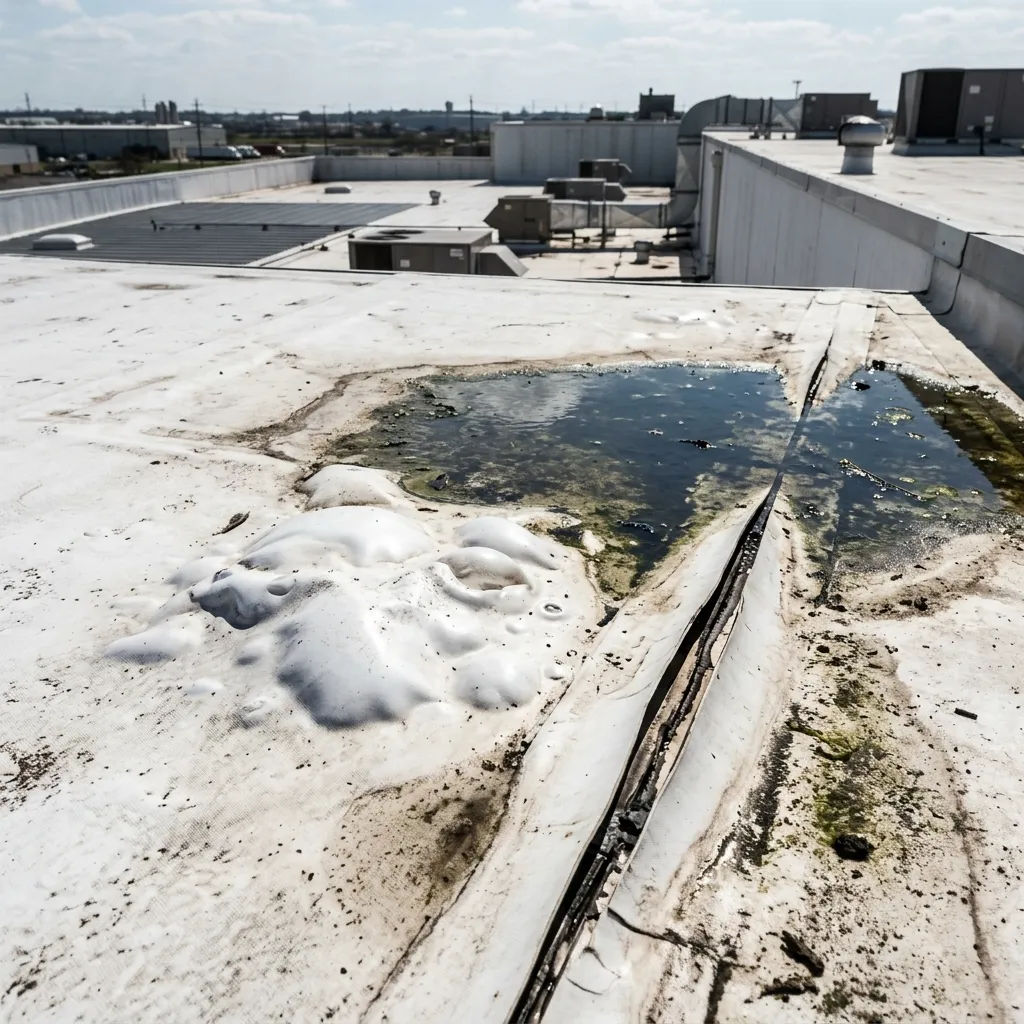
What it looks like: The edges of the TPO membrane pull apart at the seams, creating visible gaps or bubbling along the weld lines.
Why it happens: TPO seams are bonded using robotic hot-air welders that melt the membrane edges together. If the temperature is too low, the weld is weak. Too high, and the membrane burns and becomes brittle. Both lead to seam failure within 3–5 years.
The New Mexico factor: Our 40°+ daily temperature swings cause constant expansion and contraction, which stress-tests every seam twice a day. Poorly welded seams that might survive 10 years in a mild climate fail in 3–5 years here.
The fix: A qualified crew can re-weld individual seams using a hand welder without replacing the entire membrane. This is a same-day flat roof repair that costs a fraction of replacement. However, if seam failures are widespread (multiple locations across the roof), it indicates a systemic installation problem that may warrant full TPO replacement.
2. Ponding Water
What it looks like: Standing water pools that remain on the roof 48+ hours after the last rain. You'll often see algae rings or dirt stains marking the edges of chronic ponds.
Why it happens: Flat roofs aren't truly flat — they're designed with a minimum 1/4-inch per foot slope toward drains or scuppers. Ponding occurs when the drainage system is blocked, the original slope was insufficient, or the roof deck has sagged over time.
Why it matters: Ponding water accelerates UV degradation (water acts as a magnifying lens), adds structural weight (1 inch of water = 5.2 lbs/sq ft), and eventually degrades the membrane from constant moisture exposure.
The fix: First, clear and repair drainage — blocked scuppers and clogged drains are the most common cause. If the slope itself is the problem, tapered insulation systems can redirect water flow without a full tear-off. For existing ponding damage, an elastomeric roof coating can seal and protect the affected area.
3. Punctures and Mechanical Damage
What it looks like: Holes, tears, or indentations in the membrane, often near HVAC units, satellite dishes, or roof access points.
Why it happens: TPO is a single-ply membrane — typically 45 to 80 mil thick (about the thickness of a credit card to a nickel). Dropped tools, heavy foot traffic, or hail can puncture it. In New Mexico, the most common cause is HVAC technicians walking on the roof without walk pads.
The fix: Individual punctures are patched with a TPO membrane piece heat-welded over the damaged area. For high-traffic zones, install permanent walk pads (textured TPO strips) to protect the membrane. If your roof has HVAC equipment, insist on walk pads during installation — it's a $200 investment that prevents $2,000+ in future repairs.
4. Membrane Shrinkage
What it looks like: The membrane pulls away from edges, flashings, and penetrations. You'll see the TPO "retreating" from parapet walls or curbs, exposing the underlying insulation or deck.
Why it happens: All TPO membranes shrink slightly over their lifespan as plasticizers in the material slowly evaporate. Budget 45-mil membranes shrink significantly more than 60-mil or 80-mil commercial-grade material. New Mexico's intense UV and extreme temperature cycling accelerate this process.
The fix: If shrinkage is limited to edges and flashings, a contractor can re-attach and re-weld the membrane with additional material. If the entire membrane has visibly tightened (wrinkles across the field), it's likely past its service life and full replacement is the responsible path.
5. UV Degradation and Chalking
What it looks like: The membrane surface becomes chalky, discolored, or brittle. Running your hand across it leaves a white powder residue.
Why it happens: At 7,000+ feet elevation, Santa Fe receives some of the highest UV radiation in the continental US. While TPO is engineered for UV resistance, cheaper formulations and thinner membranes degrade faster. A 45-mil budget TPO can show visible UV damage within 8–10 years at altitude.
The fix: If the membrane is still structurally sound (flexible, seams intact), an elastomeric roof coating can restore UV protection and extend the roof's life by 10–15 years at roughly 30% the cost of replacement. If the membrane is brittle and cracking, coating won't help — it needs replacement.
TPO Problems: Repair vs. Replace Decision Guide
| Situation | Recommendation | Typical Cost |
|---|---|---|
| 1–3 seam failures, roof under 15 years old | Seam re-weld (repair) | $300–$800 |
| Ponding from blocked drains | Drain repair + coating | $500–$2,000 |
| Individual punctures | Patch repair + walk pads | $200–$600 |
| Edge shrinkage only | Re-flash and re-weld edges | $1,000–$3,000 |
| Chalking but still flexible | Elastomeric roof coating | $2–$4/sq ft |
| Widespread seam failure, shrinkage, or brittleness | Full TPO replacement | $7–$11/sq ft |
How to Prevent TPO Problems
Most TPO failures are preventable. Here's the maintenance schedule we recommend for every flat roof in New Mexico:
- Twice-yearly inspection: Spring (after freeze-thaw season) and fall (before monsoon season). Check seams, flashings, drains, and membrane condition.
- After every major storm: Hail, high winds, and heavy rain can cause immediate damage that worsens quickly if not addressed.
- Annual drain cleaning: Remove debris from scuppers, drains, and gutters. Blocked drainage is the #1 preventable cause of ponding damage.
- Install walk pads: Any area with regular foot traffic (HVAC access, roof hatches) should have protective walk pads.
A proactive maintenance plan costs roughly $200–$400 per inspection and can prevent $5,000–$15,000 in emergency repairs.
Schedule a Free TPO Roof Inspection
If your TPO roof is showing any of these signs, don't wait for a monsoon to find out how bad it is. Northway Roofing specializes in TPO installation, repair, and coating systems for Santa Fe and Albuquerque properties. Call (505) 470-7663 or request your free inspection.