The 25% rule means that if more than 25% of your roof is damaged or being repaired, New Mexico building code requires you to replace the entire roof — not just patch the damaged section. This threshold applies to both residential and commercial properties in Santa Fe, Albuquerque, and throughout the state.
Below, we explain exactly how this rule works, when it applies, and what it means for your wallet.
How the 25% Rule Works in Practice
The 25% rule is codified in the International Building Code (IBC) Section 1511.3 and the International Residential Code (IRC) Section R908.3, both of which New Mexico has adopted. Here's what it means in plain language:
- Under 25% damage: You can repair or re-roof only the damaged section. A building permit may still be required, but you won't need a full tear-off.
- Over 25% damage: The entire roof must be stripped down to the deck and replaced with materials that meet current building codes — including modern energy-efficiency and wind-resistance standards.
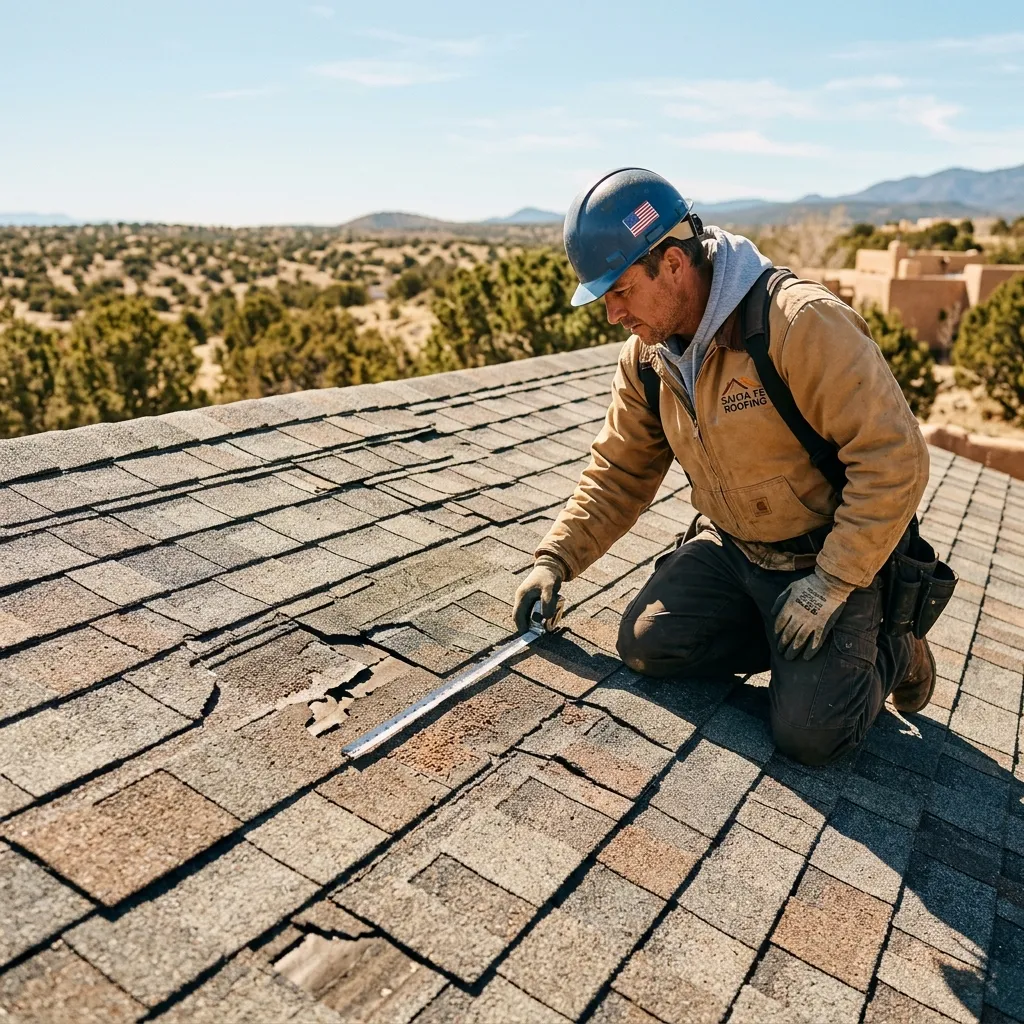
The percentage is calculated based on total roof area, not just the visible damage from the ground. A qualified inspector measures the full surface, including sections hidden behind parapets or equipment on commercial buildings.
Why Does This Rule Exist?
The 25% rule exists for three practical reasons:
- Structural safety: Layering new materials over badly damaged decking hides rot, sagging, and compromised structural integrity. A full tear-off forces a deck inspection.
- Code compliance: Roofing codes evolve. A roof installed in 2005 likely doesn't meet 2026 wind uplift or energy standards. The threshold ensures major repairs bring the entire structure up to current code.
- Weight limits: Most residential structures can support a maximum of two shingle layers. Once the 25% threshold is crossed, a third layer of patching is structurally dangerous — the deck wasn't engineered for that weight.
How Santa Fe Building Inspectors Apply the Rule
In Santa Fe County, the Construction Industries Division (CID) enforces this threshold during permit review. Here's how the process typically works:
- You pull a roofing permit from the City of Santa Fe or Santa Fe County (required for any roof work over 100 sq ft).
- The inspector reviews the scope of the project and calculates the percentage of the roof being touched.
- If it exceeds 25%, the permit is issued as a full replacement — meaning the old materials must be torn off, the deck inspected, and the new system must comply with current NM energy code (IECC 2021).
This is why it's critical to get a professional assessment before committing to a "repair." What starts as a $3,000 patch job can become a $15,000+ full replacement once the inspector measures the actual scope.
The 25% Rule and Insurance Claims
Insurance companies use the 25% threshold differently — and often more favorably for homeowners:
- Per-slope assessment: Many adjusters evaluate damage per roof slope (face), not the total roof area. If one slope has 30% hail damage, they may approve a full roof replacement even if the other slopes are fine.
- Matching clause: Some policies include a "matching" provision — if the damaged shingles are discontinued and can't be visually matched, the insurer replaces all visible sections.
- Code upgrade coverage: If your policy includes "ordinance or law" coverage, the insurer pays the additional cost of bringing the replacement up to current building codes.
Pro tip: Always have your contractor document the damage with photos and measurements before filing the claim. An adjuster who sees professional documentation approves claims faster than one who has to re-inspect from scratch.
When a Partial Repair Makes Sense
Not every roof problem triggers the 25% rule. A partial repair is appropriate when:
- The damage is limited to a small area (e.g., a few missing shingles from wind)
- The roof is less than 10 years old with a valid warranty
- There's only one layer of existing material
- The roof deck is structurally sound with no signs of rot or sagging
In these cases, a targeted maintenance repair is both code-compliant and cost-effective. The key is getting an honest assessment of the damage scope before you start pulling shingles.
How to Know If Your Roof Triggers the 25% Threshold
Unless you're a licensed contractor, you shouldn't estimate this yourself. Here's what a professional inspection covers:
- Full surface measurement using satellite imagery and on-roof verification
- Damage mapping that marks every affected area on a diagram
- Layer count — how many shingle layers currently exist
- Deck condition — probing for soft spots, rot, or inadequate fastening
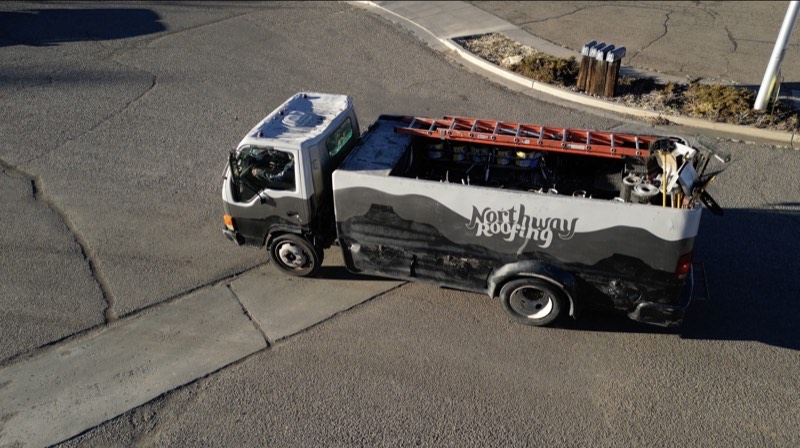
At Northway Roofing, every free inspection includes a written report with the damage percentage calculated. If you're under 25%, we'll tell you — and we'll only recommend the repair you actually need.
Get an Honest Assessment
Whether your roof needs a $2,000 patch or a $20,000 replacement, the 25% rule determines which path you're legally required to take. The worst mistake homeowners make is starting a repair without knowing their number. Contact Northway Roofing for a free, no-obligation inspection — we'll measure the damage, calculate the percentage, and give you a straight answer.