When homeowners realize it is time for a new roof, their minds immediately jump to choosing shingles versus TPO, or calculating the budget. However, there is a far more critical administrative hurdle you must clear before a single shingle is stripped from your home: building permits.
One of the most frequent questions we receive is: “Do I really need a permit to replace my roof in Santa Fe?”
The short answer? Yes. Absolutely.
In this guide, we will break down exactly what the City of Santa Fe Land Use Department demands, what NM building codes dictate, and the severe consequences of attempting to bypass this crucial step.
When is a Roof Replacement Permit Required in Santa Fe?
Local regulations in Santa Fe are strictly enforced to protect homeowners, preserve historical neighborhood aesthetics, and ensure structural safety against heavy NM snowfall.
- Full Roof Replacements: Anytime you are performing a "tear-off" (removing the existing roof down to the wooden decking) and installing a new roof, a building permit in Santa Fe is legally required. A standard re-roof project falls heavily into this category.
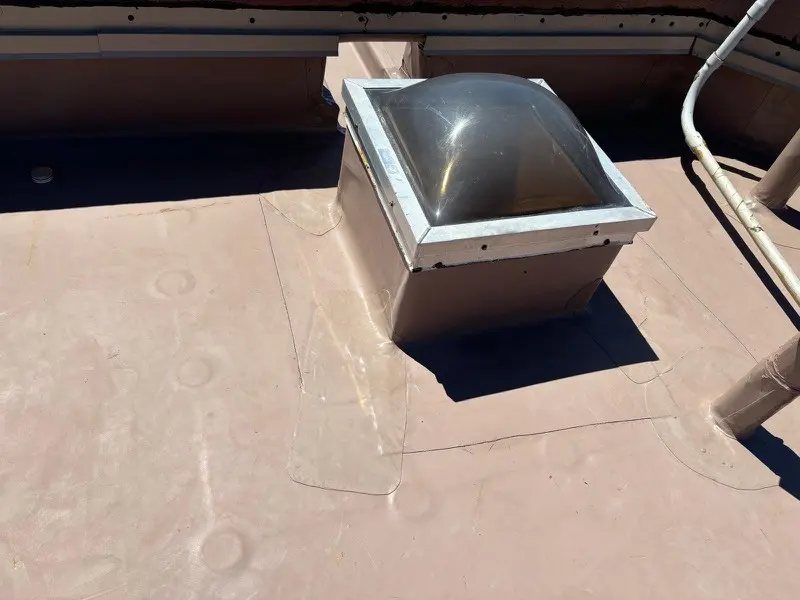
- Structural Changes: If you are changing the pitch of the roof, adding dormers, replacing rotted trusses, converting a flat roof into a pitched roof, or altering mechanical equipment on the roof, a permit (and potentially architectural blueprints) is mandatory.
- Minor Repairs (Exemptions): You typically do not need a permit if you are simply patching a localized leak, replacing a few blown-off shingles, or clearing gutters. If the repair covers a small percentage of the total square footage, it is considered maintenance. However, if the scope of the work expands, they must approve it.
Navigating NM Building Codes and Historical Districts
New Mexico building codes (which adopt variations of the International Building Code) have specific regulations regarding how many layers of roofing can legally exist on a home. For example, if you already have two layers of asphalt shingles, the code explicitly states you cannot lay a third layer; you must tear it all down to the underlying assembly structure. A municipal inspector will easily spot code violations during their mandatory sign-off.
Santa Fe Historic District Restrictions
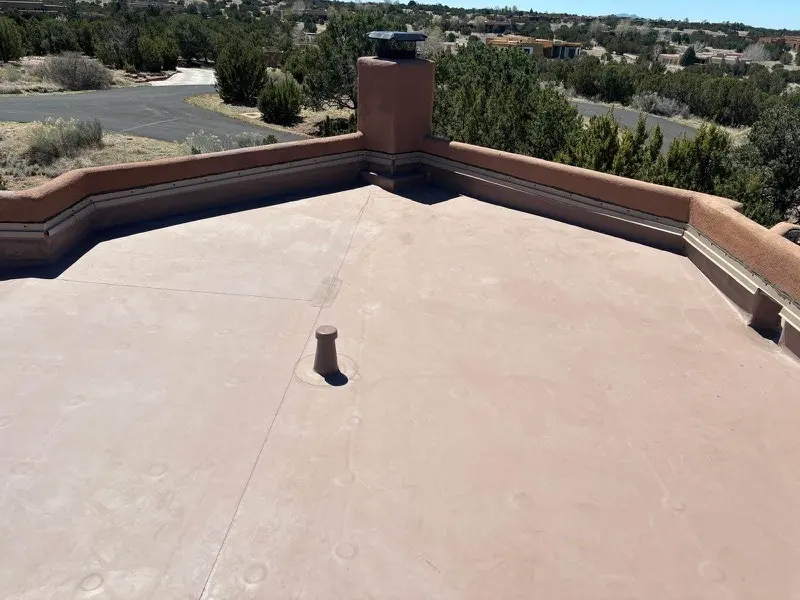
If you live in one of Santa Fe's designated Historic Districts, acquiring a permit requires jumping through an extra hoop: the Historic Districts Review Board (HDRB). The city passionately defends its unique Pueblo Revival and Territorial styles. If you attempt to replace a traditional flat parapet roof with bright red metal corrugated panels without HDRB approval, the city will force you to rip it off.
The Dangers of Unpermitted Roof Work and Failed Inspections
Homeowners sometimes try to save a few hundred dollars by hiring an unlicensed handyman who promises to do the job without a permit or avoids submitting a final payment ledger to the state. This is one of the most expensive mistakes you can make as a homeowner.
1. Municipal Stop-Work Orders and Fines
If the City of Santa Fe catches unpermitted roof work in progress, they will issue a "Stop-Work" order immediately. You will face heavy municipal penalties, and you will be forced to retroactively apply for a permit at a significantly higher fee. If the work was done improperly, the city can mandate a complete tear-down.
2. Voided Homeowners Insurance
If a catastrophic monsoon or hail storm severely damages an illegally installed roof, your insurance provider will investigate. Upon discovering the lack of permits, they will deny your claim entirely. You are now personally liable for the full replacement. Note that basic maintenance and repair work — like patching a small leak on one side of the roof — typically does not require a permit, but a full tear-off and re-roof always does.
3. Impossible to Sell Your Home
When you attempt to sell your house, the buyer's inspector will cross-reference the city's permit history for major renovations. When they see a brand-new roof but no permit on file, the mortgage lender will flat-out refuse to finance the buyer's loan until you pay for retroactive inspections and engineered sign-offs. The lender needs all required information on file before closing.
Who is Responsible: Your Roofer or You?
While the homeowner is legally on the hook for their property, you should almost never pull the permit yourself.
Any legitimate, licensed roofing contractor in New Mexico will pull the municipal permits for you. The permit must be directly attached to their state contracting license (CID) and their liability insurance. If a contractor asks you to go to city hall and pull the permit under your own name as an "owner-builder," it is a massive red flag. It usually means they have lost their license or lack the workers' compensation insurance required to pull their own.
The Permit Application Process: Step by Step
Understanding the process makes it far less intimidating. Here's how a typical residential roofing permit works in Santa Fe:
- Get a detailed estimate from a licensed contractor. The quote should specify all materials being used — underlayment, shingles or membrane, flashing, and any structural modifications.
- Your contractor submits the permit application to the City of Santa Fe (or applicable county). It requires a site address, total project dollar value, scope drawing, and the contractor's license number.
- Plan review. The building department reviews whether the proposed work meets current code. For standard residential re-roofs, approval typically takes same-day to 48 hours.
- Work begins once the permit is approved and posted at the job site.
- Final inspection. After the roof is complete, a city inspector must certify the work as code-compliant. For significant structural changes (like switching from asphalt to heavy clay tile), a structural engineer may also need to sign off on the framing.
The fee for a standard residential re-roof permit in Santa Fe typically ranges from $75 to $250, depending on the total project value. For new construction, the roofing permit is usually bundled into the overall building permit.
FAQs About Roofing Permits in Santa Fe
Here are the most common questions homeowners in the Southwest ask about permits:
- Does a warranty still apply without a permit? Many manufacturer warranty programs require proof of permitted, code-compliant installation. Skipping the permit can void your warranty entirely — costing thousands if something fails in year five.
- What about Albuquerque? The Albuquerque Building Safety Division follows the same International Building Code (IBC) framework. The process is nearly identical, though fee schedules differ slightly.
- Is it ever worth skipping a permit? No. The only "savings" is $75–$250 and a day or two of wait time. The risks — insurance claim denials, fines, and inability to sell your home — far outweigh it.
Get a Free Estimate and Let Us Handle the Permit
At Northway Roofing, we believe that transparency and strict adherence to the law are non-negotiable. We handle the entire permitting phase, schedule the final municipal inspections, and ensure your new roof meets every single NM building code requirement.
Don't risk your home on unpermitted shortcuts. Contact Northway Roofing today for a free quote and let us handle your roof replacement the right way!